Why Talk Therapy Alone May not Be Enough: A Therapist in Sacramento Explains Somatic Experiencing©

Have you ever found yourself thinking, "I know I'm okay," yet your heart still races, your muscles tense, or you feel overwhelmed as if something bad is about to happen? This disconnect is one reason talk therapy alone may not always be enough to heal trauma or tame the anxiety. As a licensed therapist in Sacramento, I value traditional talk therapy a great deal though it has limitations when it comes to healing from chronic stress, persistent anxiety, or traumatic events.
In my 12 years in private practice as a Sacramento therapist working with adults who have mood disorders and attachment trauma, I often encountered clients whose trauma histories were misdiagnosed or overlooked, affecting their symptoms and treatment. After researching various therapy methods, I completed a three-year Somatic Experiencing© training—a gentle, body-focused technique for addressing trauma and chronic stress to better support my clients.
The Benefits of Talk Therapy
Not surprisingly, I’m a big cheerleader when it comes to encouraging people to participate in talk therapy. It can help you identify unhealthy belief systems and patterns, gain insight and new perspectives of past experiences, learn to identify emotions and thought patterns, strengthen relationships, and develop healthy coping skills to deal with being a human in a very complicated time.
The limitations of talk therapy show up when we intellectually understand the “why” we keep worrying, feel depressed and stuck, overwhelmed and stressed out, but our bodies aren’t listening to our mind. When our cognitions don’t match our emotions, frustration, confusion, and self-blame can show up to chastise us for not being able to talk our way out of feeling anxious.
You may understand your trauma intellectually while your body continues reacting automatically. Trauma and chronic stress often require addressing thoughts, emotions, and physiology to change the patterns in the nervous system. Change happens through a combination of insight and healing nervous system dysregulation.
Trauma Lives in the Nervous System, Not Just Memories
It’s helpful to understand the body’s survival system response to understand how Somatic Experiencing therapy in Sacramento may be helpful for you. Our bodies are naturally wired to protect us from danger through a built-in survival system known as the threat response cycle which is described in these four states: fight, flight, freeze, and fawn. When we sense a threat—whether it's physical danger, emotional conflict, or overwhelming stress—our nervous system automatically responds in ways designed to help us survive.
Fight may show up as anger, irritability, or feeling a need to defend yourself. Flight often looks like anxiety, overworking, perfectionism, or avoidant behaviors such as staying busy. Freeze can leave you feeling numb, disconnected, stuck, or unable to act, even when you want to move forward. Fawn, a response commonly associated with relational trauma, involves prioritizing other people's needs over your own through people-pleasing, conflict avoidance, or seeking approval to stay safe.
These responses are not signs of weakness or character flaws—they are normal, instinctual, and adaptive strategies your nervous system developed to protect you. While they may have been helpful during difficult experiences, they can continue long after the threat has passed, leaving you feeling trapped in patterns that no longer serve you. Healing involves helping your nervous system recognize that you are safe in the present, so these protective responses no longer remain in charge.
When Survival Responses Don’t Turn Off
Chronic stress and traumatic stress can become stuck in our nervous system, making it difficult to think our way out of the physiological state. While gaining an intellectual understanding of the physiology of trauma and persistent stress can be helpful in recognizing what’s happening, no amount of talking or thinking about it can change it.
Our instinctual threat responses help us avoid danger and seek safety. When we have experienced prolonged stress due to environmental factors and traumatic events, unresolved threat responses create patterns in our nervous system that show up when we don’t need it to protect us. Those nervous system patterns may show up as hypervigilance, sleep difficulties, panic attacks, chronic muscle tension, digestive issues, unexplained chronic anxiety, or feeling disconnected from yourself and others.
What Is Somatic Experiencing?
Somatic Experiencing© (SE) “is the life’s work of Peter A. Levine, PhD, resulting from his multidisciplinary study of stress physiology, ethology, biology, neuroscience, psychology, and indigenous healing practices, together with over 50 years of successful clinical application.”
The SE™ approach helps to release traumatic shock and “stuck” patterns of the fight, flight, freeze, or fawn responses. The SE™ approach is also crucial in restoring the nervous system’s natural ability to regulate overwhelming experiences.
As a trauma therapist in Sacramento, I use SE™ to teach my clients awareness of the physical, emotional, cognitive, and behavioral cues that indicate various nervous system states (fight, flight, freeze, fawn). Developing nervous system awareness supports you in tracking body sensations with a sense of curiosity and exploration. Another important SE™ concept is identifying and fostering internal resources, which are strengths, experiences, and qualities that help you feel grounded and supported during times of stress. These might include positive memories, supportive relationships, spiritual beliefs, a steady, calming breath, or simply pausing to really take in those moments when your body feels safe, settled, or at ease. Practicing nervous system awareness combined with internal resources helps to build the capacity to tolerate emotions and physical sensations safely.
Why Somatic Experiencing Can Go Beyond Traditional Talk Therapy
After learning and practicing the basic skills of SE™, clients gradually learn to feel safer in their bodies as we work to uncouple the fear from emotions and sensations. As you increase your capacity to experience typical emotional states and the corresponding physiological sensations, you create a bigger container for naturally occurring fluctuations, which reduces overwhelm.
One of the best byproducts of my personal work as an SE™ client was learning to slow the f*ck down. When we mammals experience chronic stress and/or traumatic events, we often learn to keep busy and disregard what’s happening inside to deal with the overwhelm. Learning to slow down and be with what is present helps to increase your awareness of self and your environment, and then better discern danger from safety. We learn to respond thoughtfully to others and situations instead of the reactive patterns that endure without thought. Another fantastic byproduct is increasing our ability to be flexible in our emotions and responses instead of rigidly moving through life and being knocked over when unexpected changes occur.
Working with a certified SE™ Practitioner can help you create long-term change by shifting enduring nervous system patterns and improve regulation. As we reduce our perceived threat response patterns, it helps us to be less reactive in relationships and more intentional about our needs and boundaries. We experience new skills and awareness which increases confidence and trust in ourselves. We increase our resilience to stress and experience more emotional balance.
What Happens During a Somatic Experiencing Therapy Session?
As a long-time therapist in Sacramento, I value collaboration and compassion with my clients so they feel seen and heard without judgment. Another reason why SE™ resonated with me so much is because it centers a gentle and collaborative approach that’s guided by the client’s needs and comfort level. It is a very individualized method that is tailored to your life experiences, needs, limits, and goals. We create a path forward based on your tolerance and capacity and monitor the changes in those levels along the way.
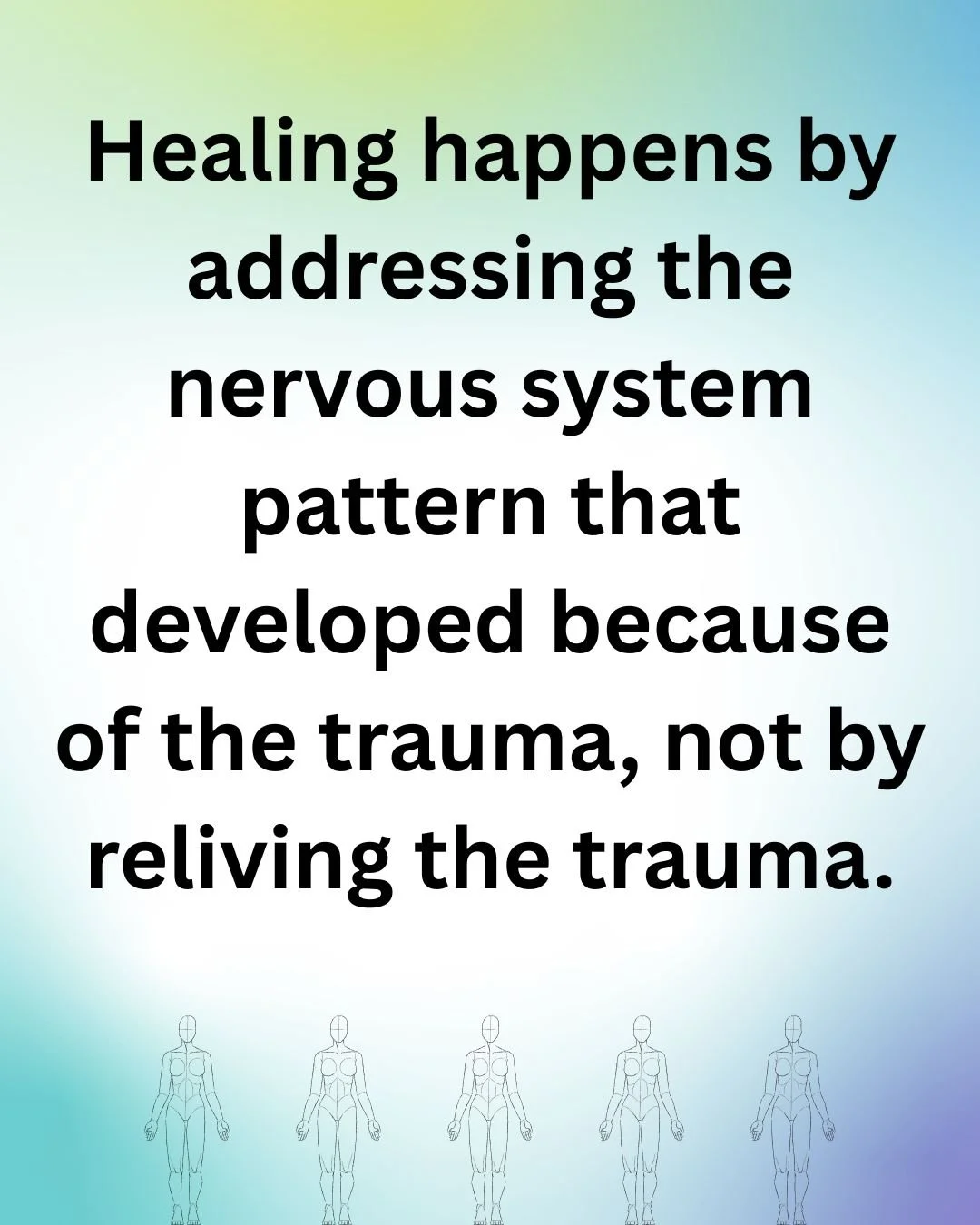
A common misconception about trauma therapy is that you must relive your trauma to heal from it. Using an SE™ approach, healing happens by addressing the nervous system pattern that developed because of the trauma, not by retelling the trauma. Healing doesn’t require revisiting every painful memory in detail to experience changes.
During an SE™ session, the focus is on the present experiences that elicit that nervous system pattern and then tracking it. With SE™ skills, you will learn to notice breathing patterns, emotions, sensations—and crucially—moments of increased safety or support so you aren’t alone with it. You build capacity to be with what is in your body as you discharge the stuck energy in your system that keeps you feeling like a revved engine. You will increase your ability to identify and build more internal and external resources that help you move through inevitable stressful life experiences.
Who Can Benefit from Somatic Experiencing?
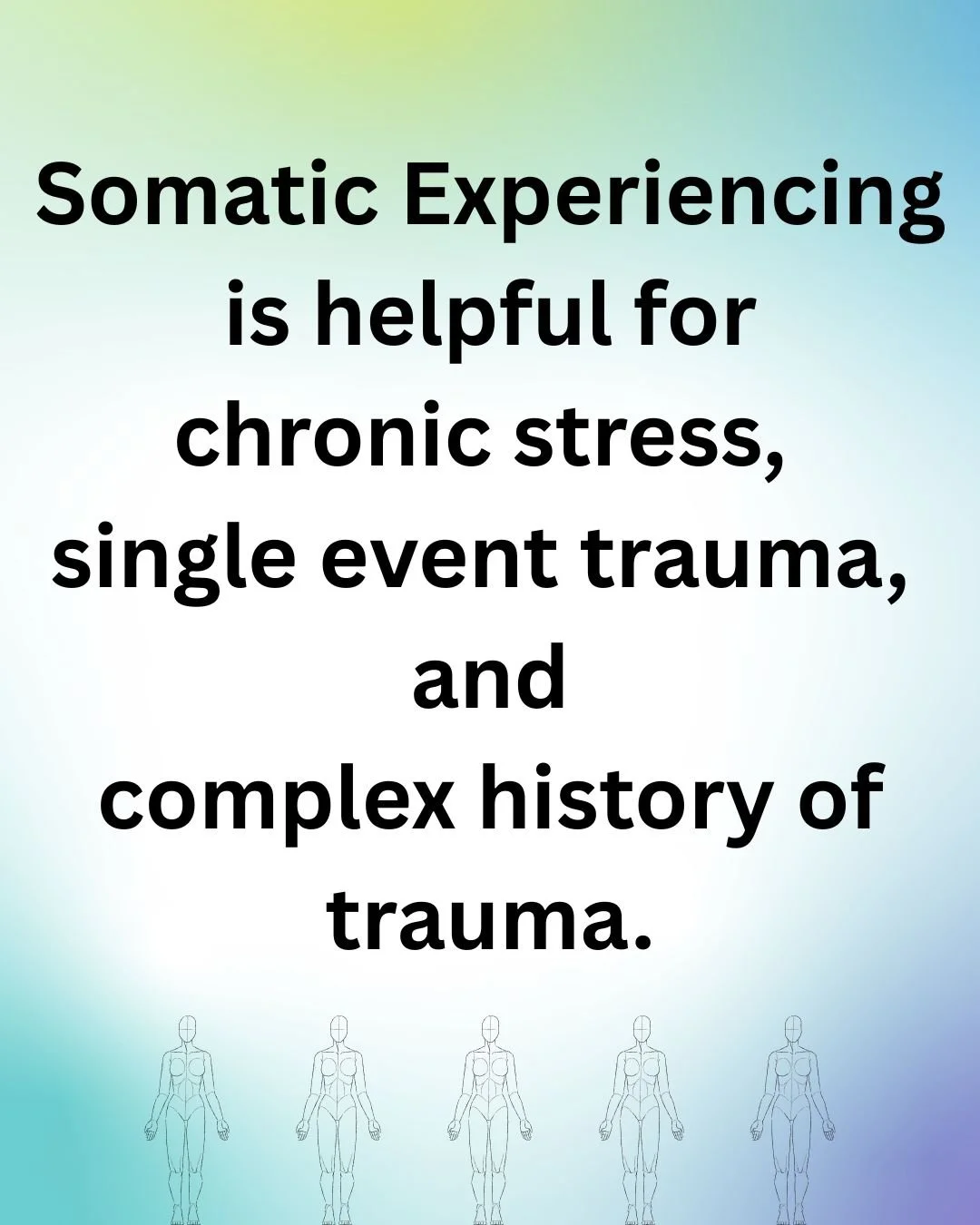
Individuals who have experienced prolonged environmental stressors such as systemic oppression, chronic criticism or shaming, chronic illnesses, or other forms of cumulative stress respond well to SE™ interventions. Often the clients I work with don’t recognize the significant impact that various kinds of chronic stress have on day-to-day living. Adults with unresolved childhood attachment wounds from well-meaning parents who were emotionally immature or unavailable often show up with trauma symptoms.
I also work with adults who have experienced trauma because of accidents, invasive medical procedures, sexual or physical assault, emotional abuse, neglect, natural disasters, or traumatic loss. Many of the individuals I support have a mixture of chronic stress and complex trauma experiences.
I work with adults in my Sacramento therapy office who experience:
Panic attacks
Chronic anxiety
Emotional reactivity
Conflictual/abusive relationships
Burnout
People pleasing
Avoidant behavior patterns
Perfectionism
Emotionally numb
PTSD
Bipolar disorder
Anxiety
Depression
Feeling stuck despite years of therapy
Why Choose a Therapist in Sacramento Trained as a Somatic Experiencing Practitioner?

I have over 20 years of experience as a talk therapist combined with completion of a three-year specialized training program with a certificate as a Somatic Experiencing Practitioner. I am better able to recognize nervous system patterns that keep you stuck and support you in transforming unhealthy approaches to dealing with stress and trauma. I collaborate with each individual to identify the specific patterns that are negatively impacting vitality.
I’m fresh out of magic wands, though I can promise you my undivided attention, non-judgmental compassion, trust and safety building, plenty of exploration, curiosity, hard work, hearty laughs, and tender support. SE™ is whole-person healing.
If you have felt frustrated because insight and awareness in previous talk therapy haven’t brought you the lasting relief you are seeking, it is not your fault. Healing trauma often requires working with both the mind and the body. SE™ offers a compassionate, science-informed way to help your nervous system move out of survival mode toward greater resilience, presence, and connection to self and others.
Connect with a Somatic Therapist in Sacramento

I provide FREE 15-20 minute phone or video consultations so we can get to know each other a bit, and I’ll answer any questions you have about somatic therapy in Sacramento.
I can describe in more detail my trauma therapy style and provide my current availability for in-person appointments or online therapy in California via secure video service.
If we talk and we agree I’m not a good fit for you, I’ll do my best to provide you with referrals who may better suit you. I’m happy to support you however your journey unfolds.